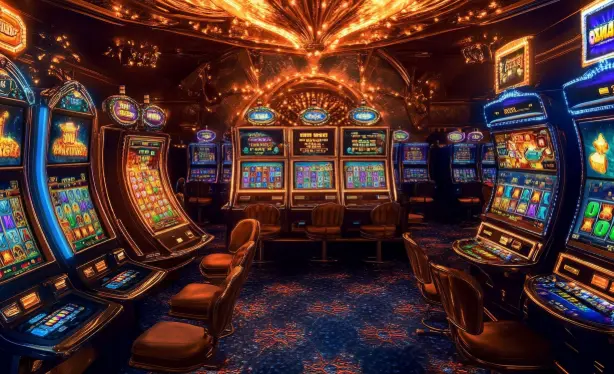
Why Zero-Cross Dimmer Boards Fail Under Real Casino Load
Triac-based dimmer boards collapse the moment you push them into a high-stakes pit because their zero-cross detection circuitry gets poisoned by the harmonic garbage pouring off hundreds of switching power supplies, slot machine rectifiers, and LED drivers running in parallel. I have walked into properties in Las Vegas and Atlantic City where the ambient lighting was strobing at 3 Hz because some contractor speced a consumer-grade dimmer rack into a 400-fixture ceiling zone. The casino ambient lighting dimmer boards USA market is flooded with rebadged theatrical controllers that have no business touching a gaming floor circuit. Real ambient lighting in a casino is not mood lighting — it is a compliance asset, a surveillance aid, and a player-retention tool all at once. 😤
The SSR Versus Triac Argument Ends With Heat
Solid-state relay dimmer boards win in gambling environments for one brutal reason: they do not produce the phase-cut noise that scrambles card shuffler electronics and RFID chip readers. A triac dimmer chops the sine wave and dumps a wall of high-frequency trash back onto the neutral. In a cage or pit that shares a panel with currency counters, that trash becomes phantom counts and dropped reads. The automated SERP light controllers used in modern retrofits must therefore be SSR-based with true zero-cross switching and independent per-channel fusing. I have seen 24-channel racks where a single failed triac took down an entire zone because the board used a shared gate drive. That is amateur hour engineering.

DMX, DALI, and the Protocol War on the Gaming Floor
Every automated SERP light controller worth installing speaks at least three protocols natively — DMX512-A, DALI-2, and 0-10V analog fallback. Why? Because the lighting control layer has to survive a facility manager swapping out a head-end without ripping out the dimmer boards. DMX gives you 512 channels per universe and sub-millisecond response for chase effects during a jackpot celebration. DALI gives you per-fixture addressing and lamp-failure reporting so maintenance knows a bulb died before a player complains. 0-10V is the ugly but unkillable fallback that works when the network switch eats itself. The controllers that only do DMX are toys. The ones that do all three with galvanic isolation between protocol buses are the only boards I will sign off on. 🤬
Thermal Derating and the 80 Percent Rule
Here is the number that separates professional dimmer boards from garbage: continuous load must never exceed 80 percent of the board's rated channel capacity, and that rating must be stated at 40 degrees Celsius ambient, not 25. A casino ceiling plenum routinely hits 45 to 50 degrees because of the heat load from fixtures, HVAC ducting, and the constant rebreathing of a sealed gaming floor. Boards rated at 25 degrees lose 20 to 30 percent of their capacity in that plenum. I have audited racks where a 16-amp channel was carrying 14 amps of LED load at 48 degrees and the board was cooking itself into thermal shutdown every 40 minutes. That is not a dimmer problem — that is a spec-sheet lie. Demand the derating curve in writing. 🔥

Surveillance Integration and Flicker-Free Output
Camera systems running at 30 or 60 frames per second will beat against any dimmer output that has ripple above 2 percent, producing rolling bands on the surveillance feed that make facial identification impossible. The dimmer board must deliver DC-quality output with ripple under 1 percent at every dim level from 1 to 100 percent. This is where cheap PWM boards get exposed — their 200 Hz switching frequency is visible to every camera on the floor. The casino ambient lighting dimmer boards USA suppliers who understand gaming operations spec 4 kHz or higher PWM with linear output filtering. Anything below that and your eye-in-the-sky is blind during the exact moment you need it.
Network Redundancy Is Not Optional
A lighting controller that depends on a single Ethernet link is a single point of failure for the entire gaming floor's ambient state. I insist on dual-homed controllers with automatic failover to a local scene store, so if the network drops the board keeps running its last commanded state instead of going dark or snapping to full brightness. Full brightness at 3 AM in a high-limit room is a player-experience disaster and a compliance flag. The scene store must be non-volatile, battery-backed, and testable via a physical dry-contact trigger. If a vendor cannot demonstrate failover in under 200 milliseconds, walk away. The floor does not forgive downtime.